Commercial property appraisal cost, services, reports and how to find an appraiser near you
A commercial appraisal is not just “what is my building worth?” The right appraiser looks at the property type, income, leases, market data, highest and best use, risk, location and the purpose of the report. This guide helps you choose the right service, avoid overpaying, and prepare the documents that make the appraisal faster and more useful.
If you searched for a commercial property appraiser, you probably need a number you can actually use: for a loan, sale, purchase, tax appeal, estate, partnership, litigation, insurance, accounting or internal decision. The biggest mistake is hiring a cheap appraiser before confirming the report will work for your purpose.
This article explains commercial property appraisal cost, what services appraisers provide, what affects the fee, what to ask before hiring, and what documents to prepare so the report is stronger.
Why do you need a commercial property appraiser?
Your reason for ordering the appraisal changes the scope, report type, cost and timeline. Pick your situation first.
Loan or refinance
The lender may require the appraiser, report format, intended user and review process. Do not order your own report unless the lender allows it.
Next step: ask the lender who must engage the appraiser.
Buying or selling
An appraisal can help test asking price, purchase price, rent assumptions, cap rate and risk before closing.
Next step: share contract, rent roll and market evidence.
Property tax appeal
The report may need to match the local valuation date and appeal rules. A normal market report may not be enough.
Next step: confirm appeal deadline and evidence rules first.
Estate, divorce or partnership
The effective date and intended users matter. A report for one legal purpose may not work for another.
Next step: ask your attorney or CPA what date and standard are needed.
Litigation or dispute
You may need a more detailed report and appraiser testimony experience. This costs more because risk and support are higher.
Next step: ask about deposition or hearing experience.
Internal planning
For investment review, portfolio planning or buyout decisions, you may need a consulting-style analysis, restricted appraisal or full appraisal.
Next step: decide how formal the report must be.
What a commercial property appraiser does and when you need one
A commercial property appraiser develops an opinion of value for real estate that is used for business, investment, income production or specialized ownership decisions. Commercial work is usually more complex than a simple home appraisal because leases, income, expenses, market rent, tenant risk, zoning, location and property type all affect value.
Rent and cash flow matter
For offices, retail, apartments, warehouses and mixed-use buildings, the appraiser usually studies rent, vacancy, expenses, lease terms and market yield.
Market evidence matters
For properties used by the owner’s business, appraisers may rely more heavily on comparable sales, building utility, location and replacement cost.
Scope matters most
Hotels, self-storage, churches, schools, car washes, medical buildings, marinas and industrial facilities may require niche experience.
Commercial property appraisal cost in 2026
There is no single price because commercial assignments are scoped case by case. Cost depends on property type, size, income complexity, data availability, report detail, deadline, inspection needs and risk. A quick local storefront appraisal is not the same as a multi-tenant industrial portfolio, hotel, lawsuit or tax appeal report.
| Assignment type | Typical complexity | Why cost changes |
|---|---|---|
| Small owner-user office or retail | Lower to moderate | Usually simpler if few leases, clear comparables and normal market conditions exist. |
| Small multifamily or mixed-use | Moderate | Rent roll, expenses, unit mix and income approach may be needed. |
| Warehouse or industrial | Moderate to high | Clear height, loading, yard, power, zoning and tenant use can affect value. |
| Land or development site | Moderate to high | Zoning, entitlements, utilities, highest and best use and absorption risk matter. |
| Hotel, self-storage or special-use | High | Specialized income, operating data, industry metrics and limited comparables may be required. |
| Litigation, tax appeal or estate dispute | High | More support, documentation, review risk and possible testimony can increase fee. |
What affects commercial appraisal fees?
Commercial appraisers quote based on scope. If you send the right details early, the quote is more accurate and the final report is usually faster.
| Cost driver | Why it matters | How to reduce delay |
|---|---|---|
| Property type | Different property types require different data and expertise. | Tell the appraiser the exact use: office, retail, industrial, land, hotel, etc. |
| Income complexity | Multi-tenant properties need lease, rent and expense analysis. | Prepare rent roll, leases and operating statements. |
| Report purpose | Lending, legal, tax and internal uses require different scope. | Explain intended use and intended users upfront. |
| Deadline | Rush work may require schedule changes and extra research time. | Order early and ask for realistic delivery date. |
| Data quality | Missing rent, expense or property data slows analysis. | Send documents in one clean folder. |
| Market difficulty | Limited sales or unusual assets require more research. | Share any known comparables, offers or market information. |
Commercial property appraisal services explained
Not every appraisal request needs the same report. The correct service depends on who will rely on the value and why.
Market value appraisal
Used for lending, buying, selling, estate, litigation, tax appeal or internal planning when a formal value opinion is needed.
Rent or income analysis
Useful for leased commercial buildings, investment review, rent reset, lease dispute or acquisition underwriting.
Tax appeal support
Used when challenging assessed value. The valuation date, evidence rules and local appeal requirements matter.
Estate or date-of-death value
May require a retrospective effective date and documentation that can be shared with tax or legal professionals.
Litigation valuation
May include stronger explanation, expert support, deposition preparation or testimony experience.
Portfolio or consulting review
Used by owners, investors or companies that need multiple property decisions, not always a full lender-style report.
Income approach, sales comparison and cost approach
Commercial appraisers commonly consider three valuation approaches. The most useful approach depends on the property and available market data.
| Approach | Best for | What appraiser studies |
|---|---|---|
| Income approach | Leased, investment and income-producing property. | Rent roll, market rent, vacancy, expenses, NOI, cap rate and risk. |
| Sales comparison approach | Properties with good comparable sales. | Recent sales, location, size, condition, use, age and market adjustments. |
| Cost approach | Newer, special-use or limited-sale properties. | Land value, replacement cost, depreciation and property improvements. |
How to find a commercial property appraiser near you
“Near me” is not enough. You need someone who understands your local market and your property type. A great apartment appraiser may not be the best person for a marina, hotel, cold-storage warehouse or medical office building.
Search by property type plus location
Use searches like “commercial appraiser industrial warehouse Dallas” or “retail property appraiser near Tampa” instead of only “commercial property appraiser near me.”
Ask for similar assignments
Ask whether the appraiser has recently appraised your property type in your market. Similar experience is more useful than generic appraisal experience.
Confirm who can use the report
Ask whether the report is for you, your lender, your attorney, your CPA, a court, an appeal board or internal planning. This affects scope.
Get fee and timeline in writing
Ask what is included, when the report will be delivered, what documents are needed and whether rush delivery changes the fee.
Questions to ask before hiring a commercial appraiser
Use these questions before you pay a retainer or sign an engagement letter.
Documents to prepare for a commercial appraisal
Good documents can reduce back-and-forth and help the appraiser understand the property quickly.
| Document | Why it helps | Who usually needs it |
|---|---|---|
| Rent roll | Shows tenant names, rent, lease terms, vacancy and income structure. | Multifamily, office, retail, industrial, mixed-use. |
| Leases | Confirms rent, options, reimbursements, term and risk. | Any leased property. |
| Operating statements | Shows income and expenses for NOI analysis. | Income-producing properties. |
| Tax bill and assessment | Helps compare assessed value, taxes and parcel data. | Most commercial properties. |
| Survey or site plan | Shows land size, access, easements, improvements and site layout. | Land, industrial, retail, special-use. |
| Building plans or floor plan | Helps confirm size, layout and usable/rentable area. | Office, medical, retail, industrial. |
| Inspection reports | Shows condition, repairs, environmental or structural issues. | Older or complex properties. |
| Purchase contract or LOI | Shows agreed price, terms and transaction context. | Purchase, sale or financing assignments. |
| Improvement list | Shows recent capital work, renovations and condition changes. | Renovated or upgraded properties. |
What to check in the final commercial appraisal report
Do not only look at the value number. Read the sections that explain what the report can and cannot be used for.
| Report section | Why it matters | What to check |
|---|---|---|
| Intended use | Controls what the report is prepared for. | Make sure it matches loan, sale, appeal, estate, legal or planning purpose. |
| Intended user | Controls who may rely on the report. | Check whether lender, attorney, owner or agency is named correctly. |
| Effective date | Value is tied to a date. | Confirm it matches tax appeal, estate, purchase or loan requirement. |
| Property rights | Fee simple, leased fee and leasehold interests can differ. | Confirm the correct interest was appraised. |
| Approaches to value | Shows how the value was developed. | Review income, sales and cost approach reasoning. |
| Assumptions and limiting conditions | Shows what the appraiser assumed or excluded. | Look for zoning, environmental, lease or condition assumptions. |
Commercial appraisal mistakes that cost owners money
These mistakes are common, especially when owners are under deadline pressure.
| Mistake | Why it hurts | Better move |
|---|---|---|
| Hiring only by lowest fee | The report may be too thin or wrong for the intended use. | Compare experience, scope and report usability. |
| Not explaining intended use | The appraiser may scope the wrong assignment. | Explain lender, legal, tax, estate or internal purpose upfront. |
| Sending messy income records | Income analysis becomes slower and weaker. | Send clean rent roll, leases and operating statements. |
| Ignoring property rights | Leased fee, fee simple and leasehold values may differ. | Ask what property interest is being appraised. |
| Waiting until deadline week | Rush work costs more and may reduce appraiser availability. | Order early, especially for tax appeal or closing deadlines. |
Commercial appraisal request script
Use this helper before emailing appraisers. A clear request usually gets a better quote.
Commercial appraisal sources used in this guide
Use these pages to understand the profession, appraisal standards and what commercial appraisers do. They are not a substitute for hiring a qualified local appraiser for your property.
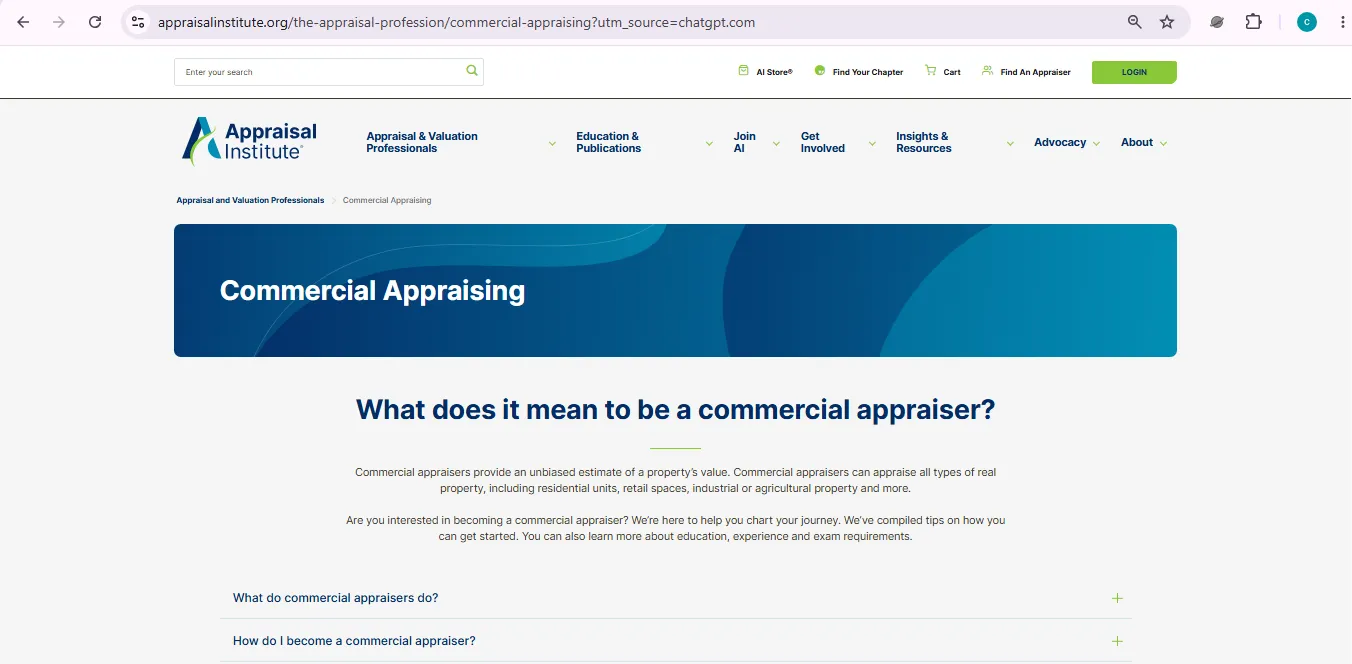
Appraisal Institute Commercial Appraising
Explains commercial appraising and the kinds of property commercial appraisers may value.
After opening: read what commercial appraisers do before comparing service quotes.
Open Commercial AppraisingAppraisal Institute Appraisal Profession
Helpful background on the appraisal profession and real estate appraiser role.
After opening: use it to understand the professional context.
Open Appraisal ProfessionThe Appraisal Foundation USPAP
USPAP is the generally recognized ethical and performance standard for appraisal practice in the United States.
After opening: review why standards matter before relying on a report.
Open USPAPBLS Appraisers and Assessors
Provides government labor-market background for appraisers and assessors of real estate.
After opening: use it for career/profession context, not property-specific advice.
Open BLS PageCommercial Property Appraiser FAQs
What does a commercial property appraiser do?
A commercial property appraiser estimates the value of income-producing or business-use real estate such as office, retail, industrial, multifamily, mixed-use, land, medical, warehouse, hotel or special-use property.
How much does a commercial property appraisal cost in 2026?
Commercial property appraisal cost depends on property type, size, income complexity, market difficulty, report type and deadline. Simple small commercial assignments may cost less, while complex income, litigation, portfolio or special-use appraisals can cost much more.
How do I find a commercial property appraiser near me?
Search for appraisers with commercial experience in your local market, ask about similar property assignments, confirm credentials, request a written scope and compare report type, timeline and fee before hiring.
What documents should I send to a commercial property appraiser?
Useful documents include rent roll, leases, operating statements, property tax bill, survey, site plan, building plans, inspection reports, recent purchase contract, improvement list, zoning information and prior appraisals if available.
How long does a commercial appraisal take?
Timeline depends on property complexity and appraiser workload. A simple assignment may take about one to three weeks, while complex income-producing, litigation, portfolio or special-use assignments may take longer.
Is a commercial appraisal different from a broker price opinion?
Yes. A commercial appraisal is a formal valuation opinion prepared by an appraiser under appraisal standards and scope requirements. A broker price opinion is usually a market estimate prepared by a real estate broker and may not replace an appraisal for lending, litigation or formal valuation needs.
Which valuation methods are used for commercial property?
Commercial appraisers commonly consider the income approach, sales comparison approach and cost approach, depending on the property type, available data, income history and appraisal purpose.
Can I use a commercial appraisal for a property tax appeal?
A commercial appraisal may help support a property tax appeal when it addresses the correct valuation date, property rights, market evidence and local appeal requirements. Always check the local assessor or appeal board rules.
What is USPAP in commercial property appraisal?
USPAP stands for Uniform Standards of Professional Appraisal Practice. It is the generally recognized set of ethical and performance standards for appraisal practice in the United States.
What should I ask before hiring a commercial property appraiser?
Ask about commercial experience, similar property assignments, service area, report type, intended use, delivery timeline, fee, required documents, inspection process and whether the report will meet your lender, attorney, tax appeal or internal-use requirement.
Best way to hire a commercial property appraiser
The safest way to hire a commercial property appraiser is to start with your purpose, not the price. Confirm whether the appraisal is for lending, sale, purchase, tax appeal, estate, litigation, insurance or internal planning. Then choose an appraiser with relevant property-type and local-market experience, ask for a written scope and send clean documents early.